Design Process
This section covers our design process and showcases several important sections of our RGM
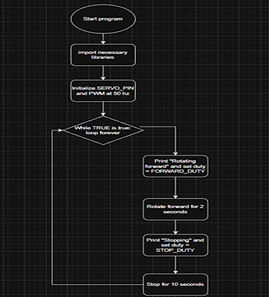


These psudocode flowcharts show how the coding behild the RGM works

This AutoCAD shows a top view of our section of the RGM
Our design process
Our process started with a team brainstorming session where we came up with several different components that we wanted to incorporate into an Office theme RGM. Some of these components included a fan, a lever, a pulley, and some sort of interesting electronic components. From this brainstorming session, we went into a deeper research stage in which we researched each part in more detail. The result of that research was a basic plan (described by our flowchart) that we thought would work well and also fit the office design. From there, we transitioned into our prototyping stage, where we made many new discoveries and areas for improvement. An area that was greatly improved because of this early prototyping was our lever at the beginning of our machine. We originally wanted a lever on the ground that a ball would fall on and tilt it such as activating a tilt switch. However, we realized this wouldn’t work well as the ball the other group used wasn’t heavy enough, and the tilt switch in the position it was in didn't activate most of the time. This led to us going with a floating lever, which allowed the lever to be pushed down further and also allowed for a better position for a tilt switch, so that it could activate in a more efficient manner. Some areas that we had tried and worked on the bat were using a cup as our item that gets pushed by the fan. Originally, we had in mind to build a sort of sail on top of a cart which we would be pushed by the fan, but one of our group members came up with a better idea. This idea was instead of building a whole cart contraption, we just use a coffee cup with two lids on each side to act as wheels. The result of this was very promising as it was activating our distance sensor 9/10 and also fit our office theme a bit better than a random cart. All of these steps lead to our end product, which averages out to only 1 interference per run, which is a success. We each learned many lessons,s such as learning how to laser cut, think about how our designs will look, research, and many others. But the most important lesson that we took away is the importance of getting a prototype as soon as possible. If we had a full prototype a week earlier than we did, I think we could’ve improved our design to average out to zero flaws. The earlier we have that prototype, the sooner we can improve it.